How to Choose the Right Solar Panels for Your Needs
What is a Solar Panel? How to Choose the Right One for Your System
When discussing solar power generation, the first image that comes to mind is undoubtedly the array of dark panels installed across rooftops. However, not all solar panels are created equal, and choosing a panel based solely on high wattage is not always the most effective strategy.
Each solar panel model varies in design, physical dimensions, efficiency, electrical specifications, cell manufacturing technology, and installation requirements. Therefore, before selecting a solar panel, it is essential to understand the fundamentals of how it operates and which system configuration best suits your specific requirements.
What is a Solar Panel?
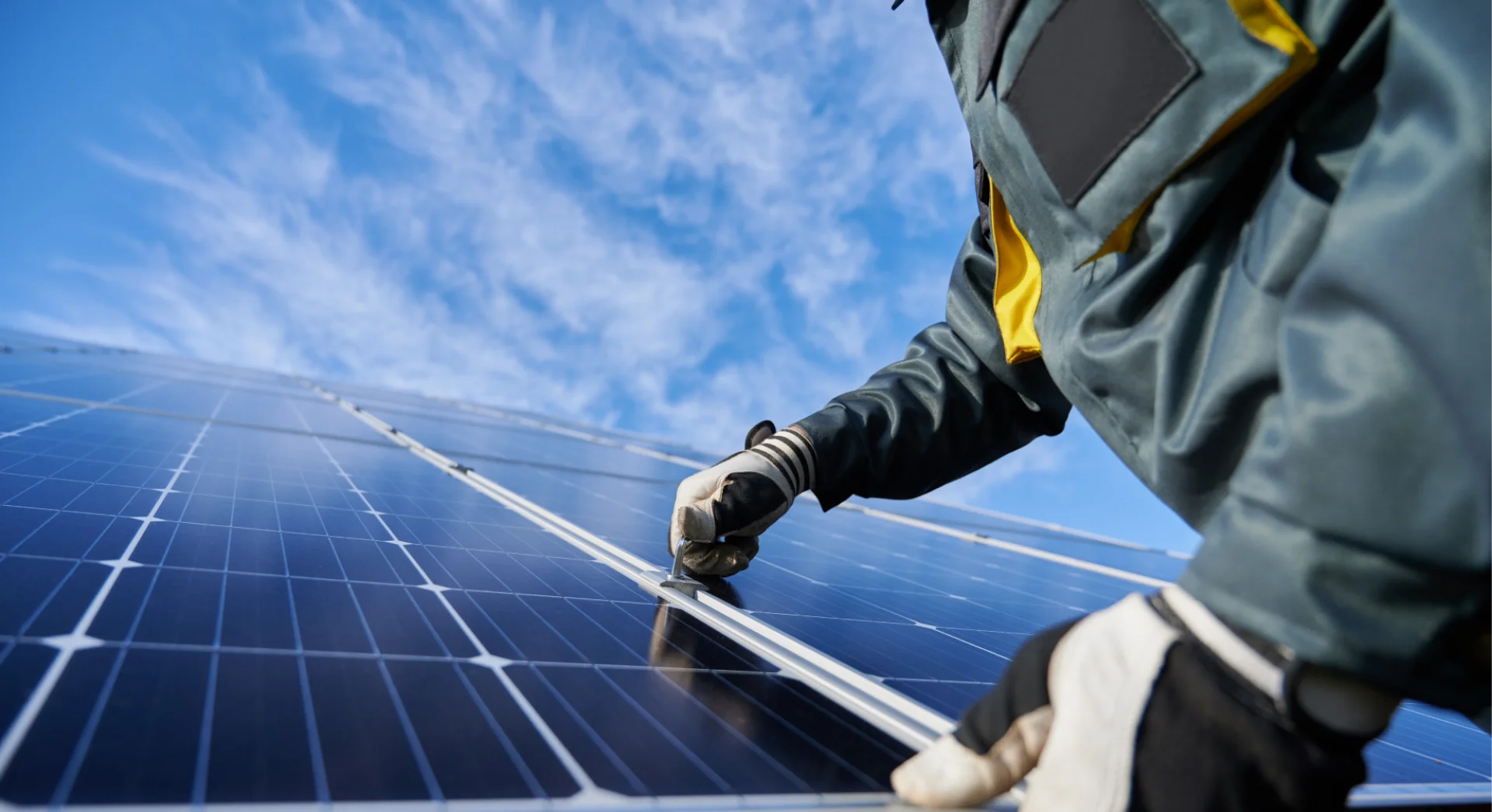
A solar panel is an interconnected assembly of photovoltaic (PV) solar cells designed to convert sunlight directly into electrical energy. The power generated by a solar panel is Direct Current (DC), which cannot be directly utilized by standard household appliances. This electrical energy must first be routed through an inverter to be converted into Alternating Current (AC).
Simplified Operational Flow:
Sunlight → Solar Panel (DC Power) → Inverter (AC Power) → Electrical System → End-User Applications
How Do Solar Panels Work? Why Do Panels with the Same Wattage Yield Different Power Output?
When sunlight strikes a photovoltaic cell, it excites internal electrons, causing them to flow and generate an electric current. However, actual power yield at the site depends on several operational variables beyond the nominal wattage rating on the specification label:
Key factors affecting actual power generation:
- Daily solar irradiance levels
- Heat accumulation on panels (higher operating temperatures reduce overall efficiency)
- Installation orientation and tilt angle
- Shading from surrounding obstacles (e.g., trees, utility poles, or adjacent buildings)
- Dust and particulate buildup on the glass surface
- Energy conversion efficiency of cell technologies and overall system design
This explains why solar panels with identical power ratings can yield different energy outputs when installed in different environmental conditions.
6 Checklist Items for Selecting Solar Panels
1. Rated Power Output (Watt / Wp)
This parameter indicates the total power output capability of the panel (e.g., a 550W panel), serving as a base value to estimate the total number of panels required. However, selecting a panel based on high wattage alone is not recommended, as higher-wattage panels generally feature larger physical dimensions that may not fit certain roof layouts.
2. Panel Efficiency
Efficiency measures the percentage of sunlight a panel can successfully convert into usable electricity. If roof space is constrained, selecting panels with high efficiency optimizes energy yield within a limited footprint. For expansive rooftops, balancing efficiency against overall project capital expenditure is advisable.
3. Physical Dimensions and Footprint
Consider physical panel dimensions alongside wattage. Residential roof layouts require precise spatial matching, while commercial and industrial facilities must align layout designs with roof structural configurations while leaving adequate clearance for cleaning and maintenance walkways.
4. Electrical Parameters (Voltage & Current)
Electrical values—such as open-circuit voltage (Voc) and short-circuit current (Isc)—are crucial for designing string configurations and ensuring compatibility with the chosen inverter. Because electrical matching is vital to system performance, solar panels and inverters should never be procured independently without engineering verification.
5. Temperature Coefficient
Solar panels require ambient light rather than extreme heat. As operating temperatures rise above standard testing conditions, power output decreases. The temperature coefficient quantifies this performance degradation per degree Celsius—a critical specification for installations in high-temperature climates like Thailand.
6. Warranty Terms and Conditions
Solar PV systems are long-term capital investments spanning 15–25 years. Beyond reviewing total warranty duration, evaluate the specific breakdown between the product/materials warranty and the performance warranty. Furthermore, verify the long-term solvency, reputation, and local support capabilities of the manufacturer and distributor.
Is Selecting the Highest Wattage Panel Always the Best Choice?
Choosing high-wattage panels offers clear advantages: higher power generation per module and fewer total panels required. However, selecting the highest wattage option requires evaluating site-specific technical constraints:
- Available Installation Area: Higher-wattage modules feature larger physical surface areas that must fit the rooftop footprint.
- Structural Load Capacity: Larger panels add physical weight, requiring verification of the roof structure's load-bearing capacity.
- Inverter Compatibility: Voltage and current outputs must match the operational parameters of the selected inverter.
- Array Layout Integration: Oversized panels may complicate layout arrangements, obstructed by skylights, vents, or structural impediments.
- Cost-per-Watt Economics: Evaluate whether the price-per-watt ratio delivers superior return on investment compared to standard module sizes.
Rather than asking, "Which wattage rating is highest?" the primary engineering inquiry should be: "Which panel specification best satisfies our structural limitations and energy consumption goals?"
Do Residential and Industrial Installations Use the Same Panel Selection Criteria?
While fundamental photovoltaic principles apply universally, design objectives for residential and industrial applications differ significantly:
- Residential Systems: Frequently face physical space constraints, complex roof geometry (e.g., gables, hips), and localized shading from trees or nearby structures. Panel selection prioritizes spatial efficiency and shading management.
- Commercial and Industrial Systems: Feature expansive rooftop areas suitable for high-capacity modules. Engineering challenges focus on structural load assessments, string inverter circuit designs, cable routing, maintenance clearance, walkway installation, and operational safety compliance.
Because of these distinct technical requirements, residential design methodologies should never be directly applied to large-scale industrial projects.
Beyond Solar Panels: Essential Balance of System (BOS) Components
While solar panels serve as the primary power capture medium, a fully functional solar system requires high-grade Balance of System (BOS) components:
- Inverters: Convert Direct Current (DC) into usable Alternating Current (AC).
- Mounting Systems: Securely anchor modules against wind loads and environmental factors.
- Cabling & Cable Trays: Provide safe, structured, and compliant electrical distribution pathways.
- Protection Devices: Circuit breakers and surge protection devices (SPD) ensuring operational safety.
- Batteries: Store surplus energy for Off-Grid or Hybrid energy storage applications.
- Monitoring Systems: Enable real-time operational tracking and system diagnostic management.
Frequently Asked Questions (FAQ)
Q: Are higher-wattage solar panels always better?
A: Not necessarily. Selection must evaluate available installation footprint, module efficiency, electrical parameters, inverter compatibility, and overall system balance.
Q: Do solar panels generate electricity on rainy or overcast days?
A: Yes. As long as diffuse solar irradiance strikes the photovoltaic cells, electricity is generated, though output decreases compared to peak direct sunlight conditions.
Q: Can solar panels be paired with any inverter model?
A: No. Random pairing must be avoided. Electrical specifications—including power capacity, operating voltage ranges, short-circuit current, and string layout designs—must be engineered to match the inverter specs.
Q: Are solar PV systems suitable for commercial factories?
A: Highly suitable—especially for industrial facilities with substantial daytime electricity loads. Prior to installation, licensed engineers must conduct structural load audits, electrical load analyses, and spatial layout planning.
Conclusion: Selecting the "Right" Panel is More Critical Than Selecting the "Largest" Panel
Solar panel selection should never rely solely on purchase price or nominal wattage ratings. Achieving long-term energy yields requires evaluating engineering factors—including conversion efficiency, physical dimensions, electrical compatibility, site constraints, and integration with Balance of System (BOS) components.
Mega Industry (Thailand) Co., Ltd. is an authorized distributor of turnkey solar energy solutions. We supply Tier-1 solar panels from globally recognized manufacturers—including LONGi, Jinko Solar, and JA Solar—alongside premium Deye inverters, energy storage batteries, certified mounting structures, and electrical containment accessories designed to support solar projects across all scales.