The Importance of Cable Trays in Solar Systems
Get to Know the 5 Essential Components of a Solar Energy System
When discussing solar power installation, the first image that comes to mind is undoubtedly the array of dark panels lining the roof. However, no matter how efficiently those panels capture sunlight, without supporting balance of system components, your solar setup cannot supply power to your building's electrical appliances.
A complete and reliable solar power generation process relies on the seamless integration of multiple subsystems—from solar energy collection, energy conversion, and power inversion, to structural mounting, cable management, and energy storage capabilities.
Therefore, when installing a solar PV system, components should never be procured as isolated parts. Instead, the focus must be on overall system compatibility. Here is an introduction to the 5 essential equipment groups you should know before installing a solar PV system.
1. Solar Panels: The Starting Point of Power Generation
Solar panels are the primary interface that absorbs sunlight and converts it into Direct Current (DC) electricity, serving as the power generation core of the entire system. When selecting panels, many people focus solely on total wattage. However, choosing modules that best fit your overall system design is far more critical. Key parameters to evaluate include:
- Rated Power (Watt) and Module Efficiency
- Physical Dimensions and Layout Footprint
- Electrical Parameters: Voltage and Current Output
- Temperature Coefficient
- Site Characteristics and Warranty Terms
Module selection should match specific site limitations. For residential rooftops with constrained spaces, high-efficiency modules that deliver maximum output per square meter are ideal. Conversely, for large commercial factories or utility-scale projects with ample space, energy economics, layout optimization, and long-term cost-per-watt efficiency take precedence over compact sizing.
2. Inverters: Power Conversion Units
While solar panels generate Direct Current (DC) electricity, home appliances and industrial equipment run on Alternating Current (AC). The solar inverter serves as the crucial intermediary that converts DC power into AC electricity, making solar energy compatible with standard electrical outlets.
Modern inverters do far more than simple power conversion—they actively optimize and track overall system performance through integrated monitoring platforms, allowing real-time tracking of power generation and operational diagnostics:
- On-Grid Inverters: Connect directly to the utility grid to offset daytime electricity costs.
- Off-Grid Inverters: Operate independently from the power grid, ideal for remote or isolated areas.
- Hybrid Inverters: Combine utility grid integration with battery storage capabilities for backup power.
Because each inverter architecture serves distinct functional requirements, selecting the correct type and specification must be aligned with overall system design from the initial engineering phase.
3. Solar Mounting Systems: Structural Anchors
Solar mounting structures are far more than simple metal frames. They are vital engineered components that securely anchor modules to structural roofs or ground layouts, ensuring long-term safety, wind resistance, and optimal tilt angles for maximum solar irradiance.
A compliant, high-standard solar mounting system must be designed in accordance with specific site conditions, including:
- Roof Type: Clay tile, metal sheet, concrete deck, etc.
- Total Module Weight and Distributed Load
- Geographical Location, Tilt Angle, and Structural Orientation
- Local Wind Load Ratings and Environmental Forces
- Weather-Resistant, Anti-Corrosive Materials (e.g., ZAM steel, anodized aluminum)
- Clearance Spacing and Walkway Integration for Maintenance Access
Particularly for large commercial and industrial rooftops, planning mounting structures during the preliminary design phase ensures organized module arrays, efficient spatial utilization, and safe maintenance access over the system's operational lifespan.
4. Energy Storage Batteries: Storing Power for On-Demand Use
A common misconception is that every solar installation requires batteries. In reality, energy storage systems are not mandatory for all configurations. Standard On-Grid systems designed to offset peak daytime consumption do not require battery storage. However, for Hybrid or Off-Grid installations, energy storage batteries play an essential role.
When solar panels generate excess electricity during peak daylight hours, surplus power is directed to charge the battery bank, providing reserve electricity for nighttime usage or grid outages.
Key factors to evaluate before selecting energy storage batteries include:
- Storage Capacity and Charge/Discharge Power Ratings
- System Voltage and Electrical Architecture
- Inverter Compatibility (Crucial step)
- Installation Environment and Warranty Conditions
Note: For applications requiring backup power, Mega Industry supplies high-performance energy storage solutions, available in both Low Voltage and High Voltage battery configurations to support diverse residential, commercial, and industrial system demands.
5. Cabling, Cable Trays, and Auxiliary Electrical Components
Even if you select top-tier solar panels and inverters, poor wiring and improper cable management will cause energy losses, operational inefficiencies, or severe electrical safety hazards.
Electrical distribution systems form the vital pathways that transmit energy across all interconnected solar hardware. Essential components in this category include:
- Specialized Solar Cables and Waterproof Connectors (e.g., MC4)
- Electrical Protection Devices and AC/DC Control Distribution Boxes
- Cable Management Solutions
- Cable Trays and Structural Containment Accessories
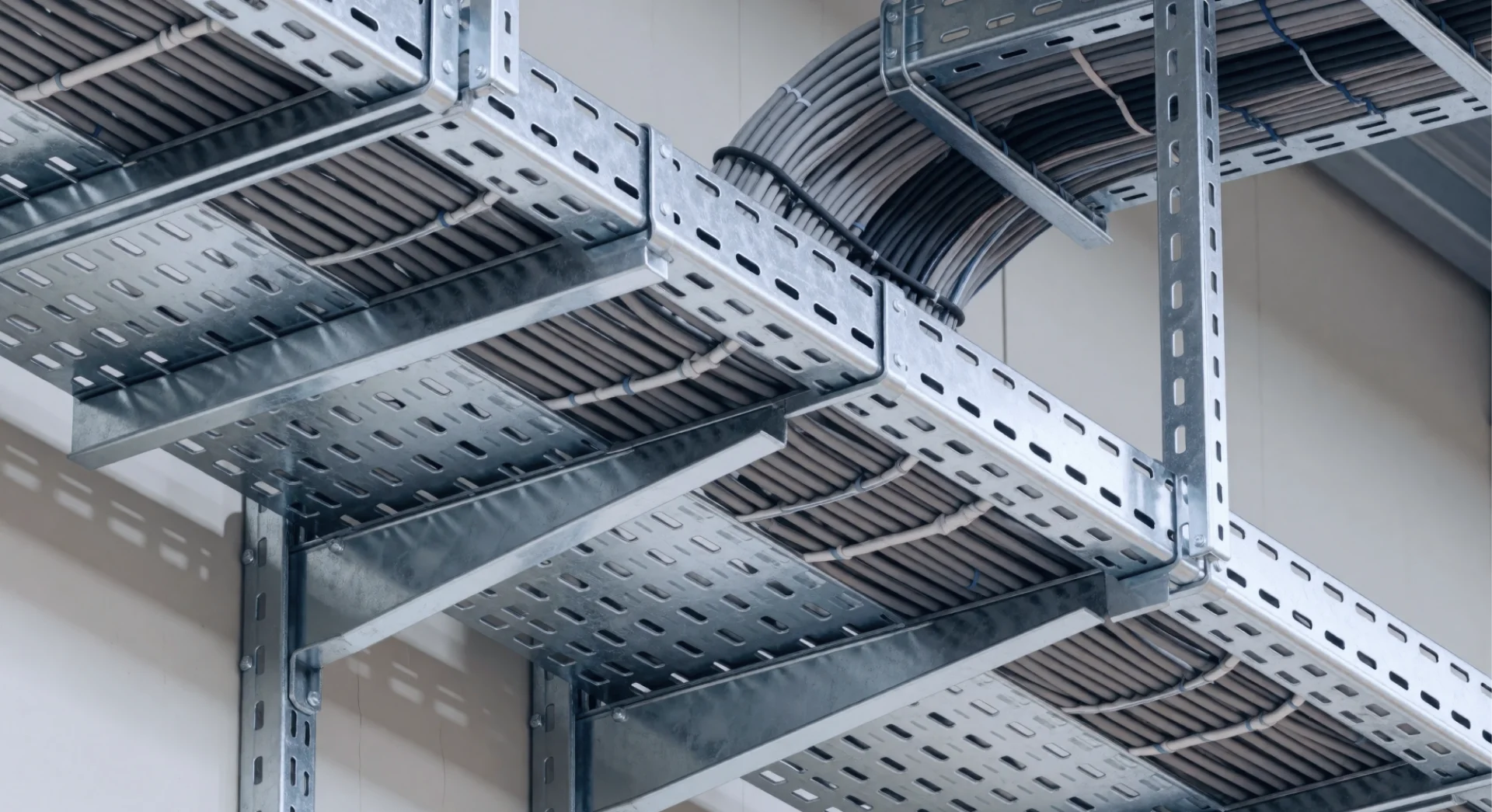
For large rooftop projects, structured cable routing is critical. Utilizing organized cable tray systems maintains clean, compliant work environments, protects cable insulation, and ensures safe access for maintenance personnel.
Are Roof Walkway Systems Necessary?
While roof walkways do not generate or convert electrical energy directly, they are indispensable safety features for commercial and industrial solar rooftop installations.
Because solar PV systems feature long operational lifespans of 15 to 25 years, regular module cleaning, wiring inspections, and equipment maintenance are required. Integrating certified roof walkway systems from the outset provides safe, easy access for maintenance crews while protecting the underlying roof structure from accidental foot-traffic damage.
Commercial and industrial projects should always incorporate a holistic engineering design that balances power generation, structural safety, and long-term maintenance access.
Can You Purchase These 5 Components Separately?
While components can be sourced individually, selecting hardware in isolation without evaluating systemic compatibility is strongly discouraged. Every element—from panels and inverters to mounting structures, cable pathways, and energy storage—must operate as a unified system.
Incompatible components compromise system efficiency and operational safety. For instance:
- Panels and Inverters: Electrical specifications (voltage, current, string configuration) must match precisely.
- Batteries: Must support seamless protocol communication and electrical compatibility with the chosen hybrid inverter.
- Mounting Systems: Must match the physical dimensions, weight of the modules, and structural load capacity of the installation surface.
- Wiring & Cabling: Cable gauges and containment systems must handle the system's maximum current safely.
Do Residential and Industrial Installations Use the Same Equipment?
While core component categories—such as panels, inverters, and mounting frames—are fundamentally similar across residential and industrial projects, physical specifications, capacities, and engineering requirements differ significantly.
- Residential Systems: Characterized by lower panel counts and simpler cable pathways. Engineering prioritizes roof layout constraints, aesthetic integration, and compact component placement.
- Industrial/Commercial Systems: Feature larger generation capacities and expansive module arrays requiring advanced engineering planning, such as:
- String circuit segmentation and multi-MPPT management
- Higher-capacity inverters and localized distribution sub-panels
- Complex cable routing pathways and dedicated cable tray systems
- Specialized mounting systems engineered for industrial roof structures
- Integrated roof walkways and maintenance access pathways
- Centralized SCADA and real-time system monitoring platforms
- Rigorous operational safety compliance
Selecting equipment based purely on lower residential pricing for an industrial project can lead to system bottlenecks, structural overload, and long-term failure.
8-Step Checklist Before Buying Solar Components
Evaluate these key checklist items against your facility's consumption profile and spatial constraints before procuring solar hardware:
1. Installation Location: Identify site parameters (e.g., residential home, home office, commercial warehouse, or factory) as each environment entails specific structural rules.
2. System Capacity Requirements: Determine target capacity based on historical electricity bills and cost-reduction goals.
3. Consumption Profile: Analyze peak usage hours. Heavy daytime usage dictates a different configuration compared to night-centric operations.
4. Battery Requirement: Decide if energy storage is required for nighttime power or emergency backup, which determines whether a hybrid system is necessary.
5. Spatial Footprint: Verify available roof area, orientation, tilt, and shading obstructions (e.g., nearby trees, vents, or adjacent buildings).
6. Inverter Architecture: Select an inverter type (On-Grid, Off-Grid, Hybrid) that aligns with system scale and load profile.
7. Structural Capacity: Perform structural load-bearing audits on the roof prior to installing mounting hardware and panel arrays.
8. Operations & Maintenance (O&M) Plan: Design accessibility pathways and maintenance protocols into the early planning phase.
Frequently Asked Questions (FAQ)
Q: What are the main components of a complete solar PV system?
A: A standard system consists of solar panels, inverters, mounting structures, and electrical cabling. Hybrid or off-grid systems add energy storage batteries, while commercial installations incorporate cable trays and roof walkway systems.
Q: Is a battery mandatory for an On-Grid solar installation?
A: No. On-Grid systems are designed to operate alongside the utility grid without requiring batteries. If nighttime power storage is required, a Hybrid system must be installed.
Q: Can I pair solar panels and inverters from different brands?
A: Yes, cross-brand integration is standard practice. However, an electrical engineer must evaluate technical specification compatibility (voltage ranges, current limits, string sizing) prior to procurement.
Q: Why is a solar mounting system necessary? Can panels be placed directly on the roof?
A: Placing panels directly on a roof is unsafe and non-compliant. Mounting systems securely anchor panels against wind loads, elevate modules to prevent water damage, and optimize tilt angles for maximum solar capture.
Q: Are roof walkways mandatory for industrial factory rooftops?
A: Walkways are strongly recommended for commercial rooftops. They ensure technician safety during routine cleaning and inspections while protecting roof panels from foot-traffic degradation.
Conclusion: A Reliable Solar System Begins with Integrated Component Selection
The key to a successful solar installation lies not in buying the most expensive individual component, but in designing an integrated system where all technical elements work harmoniously.
Prior to procuring solar hardware, evaluate system capacity, site parameters, load requirements, and component compatibility to ensure maximum long-term energy yields.
Mega Industry (Thailand) Co., Ltd. is a full-service distributor of turnkey solar energy solutions. We supply Tier-1 solar panels, inverters, energy storage batteries, certified mounting structures, cable trays, and installation accessories engineered to support commercial, industrial, and residential projects nationwide.